fair use week 2026

How Research Libraries Celebrated the 13th Annual Fair Use/Fair Dealing Week!

By Katherine Klosek

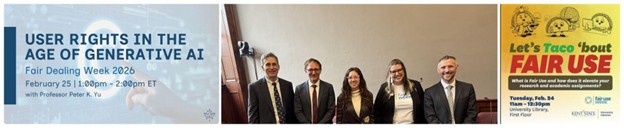
Banner advertising "User Rights in the Age of Generative AI" panel event, photo of panelists, and Taco themed pop-up event promo flyer.

The 13th Annual Fair Use/Fair Dealing Week was packed with activities celebrating the fundamental right of fair use, so we thought we’d end the week with some highlights!

ARL partnered with Re:Create to host a congressional briefing on AI and fair use from the perspective of librarians, researchers and other authors, journalists, fan communities, and other creators. Panelists and guests included members of University Information Policy Officers (UIPO), pictured above!

On Tuesday, Cindy Kristof, Kent State University Libraries’ copyright & scholarly communication librarian, hosted a taco-themed pop-up event to inform students on how we incorporate fair use into our work and recreational activities every day, featuring materials from FairUseWeek.org.

Our colleagues at CARL hosted a virtual conversation on “User Rights in the Age of Generative AI,” asking the question of whether the arrival of generative AI has raised new questions about the protection of user rights—and if so, what policy responses should be introduced to address these questions. 

I dove into some questions and hesitations I’ve heard about the intersection of accessibility and fair use in my piece “Fair Use Supports Accessibility, but You Don’t Have to Take My Word for It” for the Harvard Library Fair Use Week blog series.

Read more at FairUseWeek.org. See you next year!
Confidently Incorrect: Misunderstanding “How Much Is Too Much” for Fair Use

By Dave Hansen | February 26, 2026

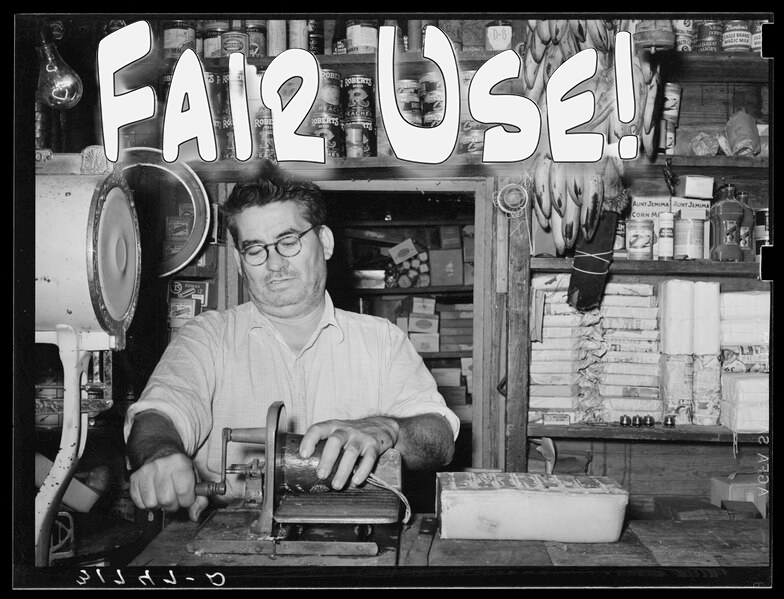
Owner of a General Store Slicing Baloney by Russell Lee (1938) (public domain).

Check out our series of posts marking the 50th anniversary of the Copyright Act of 1976, as well as a variety of other Fair Use Week blogs and events around the country.

Of the four statutory fair use factors, the “the amount and substantiality of the portion used in relation to the copyrighted work as a whole,” may be the one that generates the most confident wrong answers. In my experience, when I ask people whether a use is fair, many will reach for a number: no more than 10%, no more than 1,000 words, or no more than one chapter. These thresholds feel authoritative, and they are stated with conviction. Yet they are legally meaningless, as Kenny Crews documents in his 2001 article The Law of Fair Use and the Illusion of Fair-Use Guidelines—a case study in confident incorrectness.

Read the full “Confidently Incorrect” blog post

Respecting the Second Factor

By Eric Harbeson | February 25, 2026

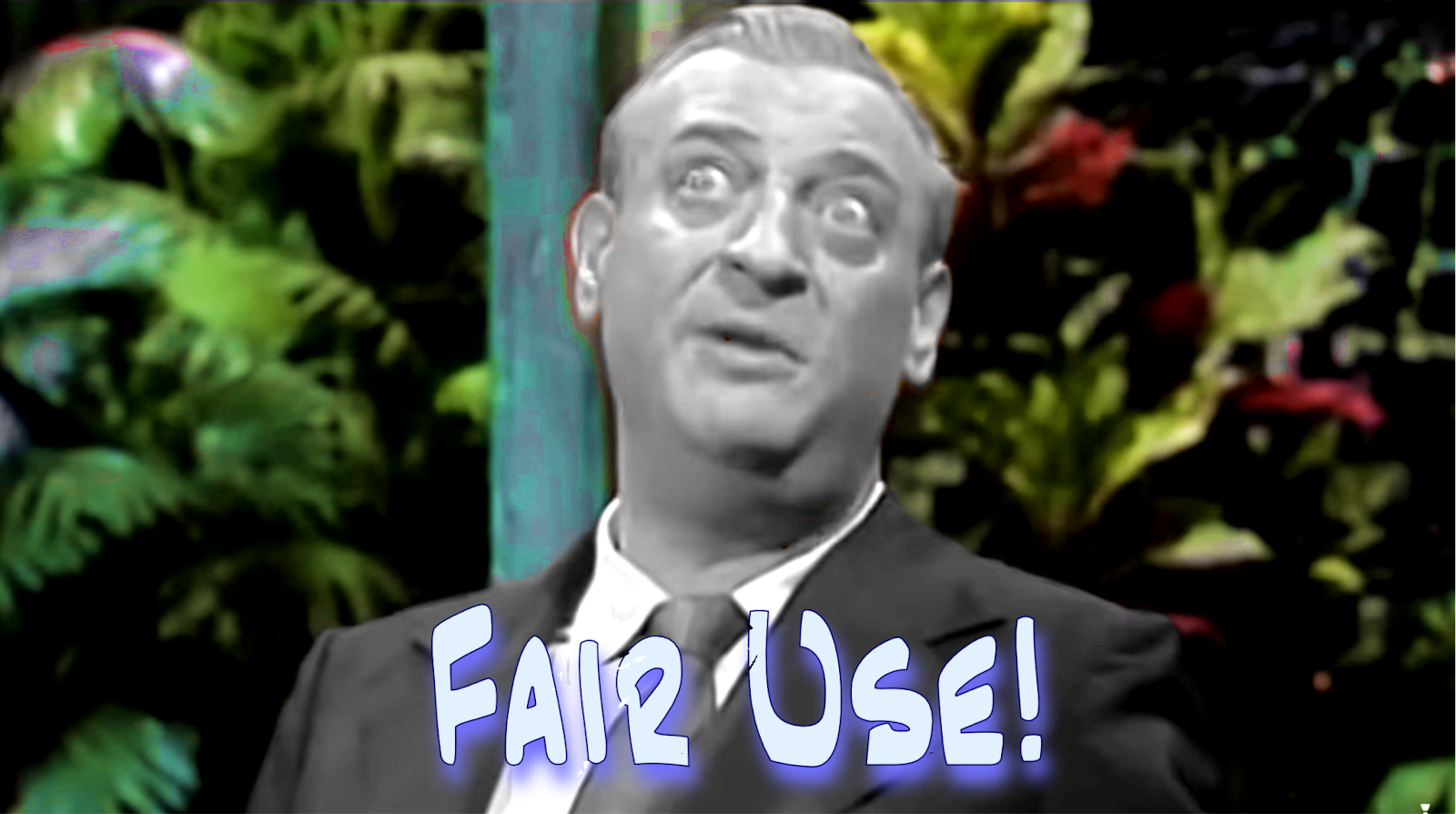
An image of a black and white Rodney Dangerfield, with a full color background, captured from an appearance on the Tonight Show.Rodney Dangerfield got so little respect even modern computer screens don’t give him any color.

Check out our series of posts marking the 50th anniversary of the Copyright Act of 1976, as well as a variety of other Fair Use Week blogs and events around the country. 

Like Rodney Dangerfield, the second factor gets no respect. It deserves better.

Everyone loves an underdog, and one of my favourites is the second fair use factor—“The nature of the copyrighted work.” The Second Circuit’s Judge Pierre Leval, in Authors Guild v. Google, neatly summed up the view of nearly every court that has taken up a fair use question: “The second factor has rarely played a significant role in the determination of a fair use dispute.” At best, most fair use opinions devote no more than a couple of paragraphs to the second factor.

I’m imagining a personified second factor, sitting on a bar stool in front of a stand-up mic: “I tell ya, I don’t get no respect. A judge tried to write about me and even he ran out of things to say.” (don’t worry, I’m not quitting my day job).

Read the full Respecting the Second Factor blog post

A Comprehensive Review of Post-Warhol Appellate Decisions on the First Factor

By Yuanxiao Xu | February 24, 2026

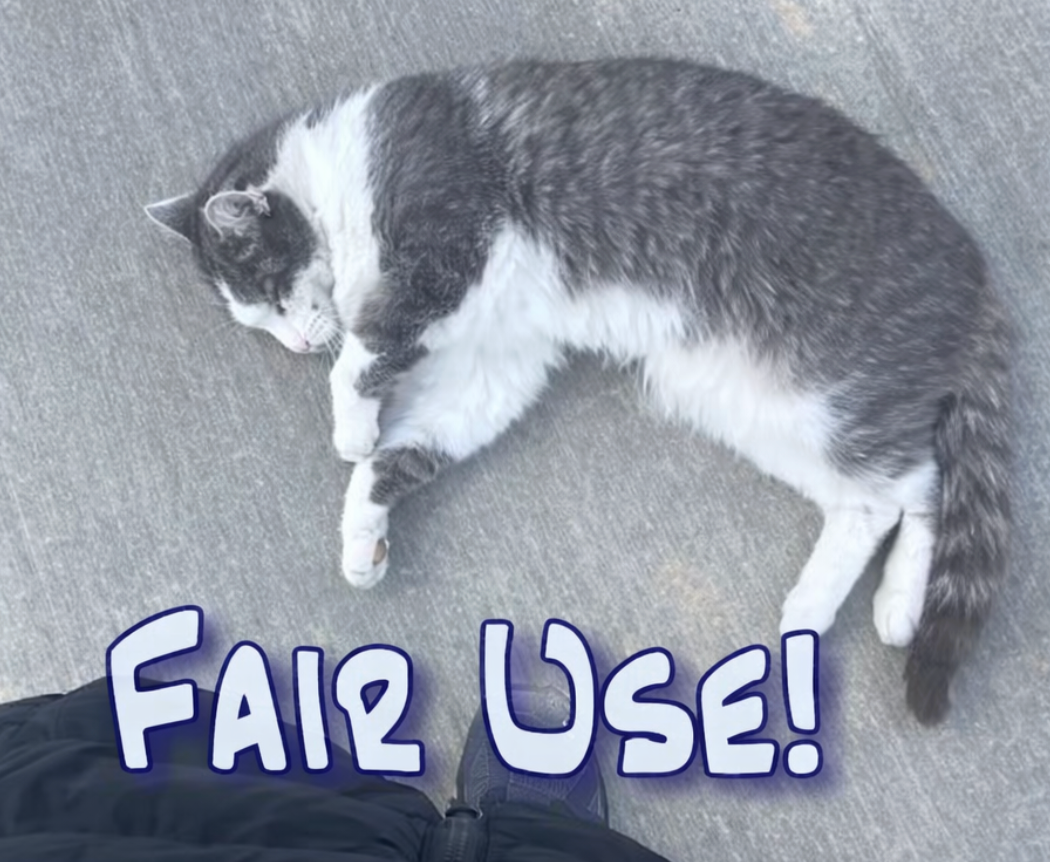
Teaching fair use, one neighborhood cat at a time. A CC0 photo the author took while on a break from writing this blog post.
Check out our series of posts marking the 50th anniversary of the Copyright Act of 1976, as well as a variety of other Fair Use Week blogs and events around the country. 

I. Warhol felt like a big deal

Warhol v. Goldsmith (2023) marked the very first time the Supreme Court opined exclusively on a SINGLE fair use factor. Considering the importance of fair use under US copyright law, it is also surprising for many casual observers that Warhol represents one of only three instances in which the Supreme Court took up fair use in the last 35 years (the other two being Campbell v. Acuff-Rose (1994) and Google v. Oracle (2021)).

Read the full A Comprehensive Review of Post-Warhol Appellate Decisions on the First Factor blog post

Fair Use Week (Sec. 107)

By Eric Harbeson | February 23, 2026

This is the latest in our series of posts marking the 50th anniversary of the Copyright Act of 1976. To find a list of all the posts in this series, click here.

Happy Fair Use Week, everyone!

Every year around this time, Civil Society copyright advocates set aside a week to celebrate one of the most important parts of our copyright law. The brainchild of the incomparable Kyle K. CourtneyFair Use Week is now in its thirteenth year. What started out as a celebration within the Harvard University community has now grown into an international celebration. So as a part of the Fair Use week celebrations, we are extending our series on the 50th Anniversary of the Copyright Act of 1976 to include a week of posts on Section 107 of Title 17, our fair use statute.

We love fair use. We use it every day, and you probably do, too. For my part, as a US-American, I’m also kind of proud of it. The fair use doctrine as we know it in the United States is one of the country’s better contributions to intellectual property laws, and its codification was the product of a great deal of thoughtfulness and care by both Congress and the Copyright Office. The doctrine has received some criticism, in international circles, for its being too open ended to be compliant with the Berne Convention, but that criticism has been largely—and justly—ignored by Congress.

Read the full Fair Use Week (Sec. 107) blog post

Fair Use, Data Analysis, Machine Learning, and Digital Humanities

Scholarly Communications at Appalachian State University welcomes Join Chris Houghton, Director of Academic Partnerships from Gale Digital Scholars Lab, for a lunch and learn presentation on “Fair Use, Data Analysis, Machine Learning, and Digital Humanities.” The learning objectives for this workshop include the following: explore big data analysis, machine learning, and natural language processing in the humanities; use digital humanities to teach responsible LLM use; understand the licensing architecture of commercial archives and what that means for academics; and publish projects, datasets, data visualizations, and results.

Register at the following link: https://docs.google.com/forms/d/e/1FAIpQLSe_YItwkvX6fy38LAqSwv57X0XE78WWingypx20xTzRD_Xb8g/viewform. (If external to Appalachian State University, email the host for access).

Fair Use Week 2026

by Kathryn Pope and Esther Jackson

Columbia University Libraries

Fair Use Week 2026

February 23–27 is Fair Use/Fair Dealing Week, an “annual celebration of the important doctrines of fair use and fair dealing. It is designed to highlight and promote the opportunities presented by fair use and fair dealing, celebrate successful stories, and explain these doctrines.” Learn more about Fair Use/Fair Dealing Week, including public events on the themes of the week.

Select Events

Fair Use

The idea of copyright–along with other intellectual property rights–is enshrined in the U.S. Constitution’s description of the powers of Congress. Article I, Section 8, Clause 8 states that Congress has the power “To promote the Progress of Science and useful Arts, by securing for limited Times to Authors and Inventors the exclusive Right to their respective Writings and Discoveries.”

Read the full Fair Use Week 2026 blog post

The Fair Use Four: Flexibility in Copyright

Fair Use Week is February 23–27, 2026!

It is a FACT that fair use is a fundamental right of citizens to:

  • Be protected by the freedom of speech (First Amendment)
  • Be creative and produce transformative works
  • Be innovative
  • Use already existing cultural and scientific material
  • Quote, reference, and cite previous materials of any format

All creativity is a “dialogue,” or an interchange of ideas and inspiration from one artist to another. Fair use is a uniquely American concept; it protects both the original creator and creators who fairly use parts of others’ works. Fair use is a fundamental principle of freedom of expression. And that is the core of creativity (Vitale, 2016).

Read the Bellevue University “Copyright Center” LibGuide and “Copyright Feature: Fair Use Week” blog post

Fair Use Week Congressional Briefing Hosted by ARL and Re:Create

Join the Association of Research Libraries (ARL) and Re:Create Coalition for a congressional staff briefing in Washington, DC, during Fair Use Week.

The briefing will highlight perspectives on AI and fair use from legal and policy experts.

Save the date and RSVP below!

Who Should Attend

Congressional staffers and others interested in technology policy, intellectual property, innovation, libraries and research policy

Speakers Include

  • Brandon Butler, Executive Director, Re:Create Coalition (moderator)
  • Dave Hansen, Executive Director, Authors Alliance
  • Betsy Rosenblatt, Professor of Law and Associate Dean of Research and Faculty Development, Case Western Reserve University Law School
  • Christopher Sprigman, Murray and Kathleen Bring Professor of Law; Co-Director, Engelberg Center on Innovation Law and Policy
  • Katharine Trendacosta, Director of Policy and Advocacy, Electronic Frontier Foundation (EFF)
  • Stephen Wolfson, Assistant General Counsel/Copyright Advisor, University of Pennsylvania Libraries

Register

Register online to attend.

Date: Wednesday, February 25, 2026

Time: 11:30 a.m.–1:00 p.m. (light refreshments at 11:30; program begins at noon)

Location: Russell Senate Office Building, Room 188 (SR-188)

Copyright Office Hours

Is there something you’ve always wondered about copyright but were afraid to ask? Stop by the Libraries and chat with our Copyright Librarian! In honor of Fair Use Week, we’ll be tabling in Main Library to share copyright resources and answer any questions you might have, like “Do I own a copyright?” “Can I use this in my project?” and more. Note: The Copyright Librarian is not a lawyer and cannot provide legal advice.

Location: Northwestern Main Library Corridor/The Street